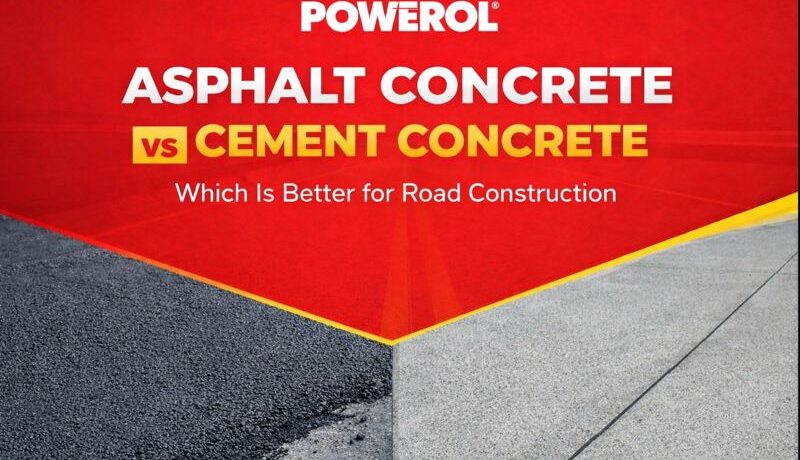
Asphalt Concrete vs Cement Concrete: Which Is Better for Road Construction?
Introduction
Road construction is a critical part of infrastructure development, and selecting the right pavement material directly affects cost, durability, construction time, and long-term performance. The two most commonly used materials are asphalt concrete and cement concrete. Both are proven solutions, but they serve different purposes depending on project conditions.
This article explains the key differences and helps determine which is better for road construction.
What Is Asphalt Concrete?
Asphalt concrete is a flexible pavement material produced by mixing aggregates, filler, and bitumen at controlled temperatures in an asphalt plant. Depending on production requirements, it is manufactured using either an asphalt batch mix plant or an asphalt drum mix plant.
Asphalt concrete is widely used for:
- National and state highways
- Urban and rural roads
- Road resurfacing and rehabilitation
- High-traffic flexible pavements
Its flexibility allows it to absorb traffic loads and minor ground movement without significant cracking.
What Is Cement Concrete?
Cement concrete is a rigid pavement material made by mixing cement, aggregates, water, and admixtures. It is commonly supplied through a ready mix concrete plant, ensuring consistent quality and controlled proportions. Many concrete companies prefer RMC concrete for large-scale infrastructure projects.
Cement concrete roads are typically used for:
- Heavy-load corridors
- Industrial and port roads
- Bus lanes and rigid pavements
- Long-life road infrastructure
Production relies on cement plants, cement batching plants, and well-managed curing practices.
Asphalt Concrete vs Cement Concrete
| Parameter | Asphalt Concrete | Cement Concrete |
| Pavement Type | Flexible pavement | Rigid pavement |
| Primary Binder | Bitumen | Cement |
| Production Facility | Asphalt plant (batch mix or drum mix) | Ready mix concrete plant / cement batching plant |
| Initial Construction Cost | Lower | Higher |
| Construction Speed | Faster; roads open quickly | Slower due to curing time |
| Load Distribution | Distributed through layers | Transferred directly to sub-base |
| Maintenance | Easier and quicker repairs | Less frequent but complex repairs |
| Service Life | Moderate with periodic resurfacing | Long design life |
| Surface Finish | Smooth and quiet ride | Hard surface, higher noise |
| Recycling Potential | High (reclaimed asphalt reuse) | Increasing through cement recycling |
| Best Applications | Highways, city roads, overlays | Heavy-load and long-life pavements |
Role of Production Plants in Road Quality
Asphalt Plants
Modern asphalt plants ensure accurate temperature control, proper aggregate gradation, and uniform mixing. Asphalt batch mix plants offer precise control for varied mix designs, while asphalt drum mix plants are suitable for continuous, high-volume production.
Concrete Production Facilities
Concrete road quality depends on reliable ready mix concrete plants and automated cement batching plants. A well-equipped concrete factory ensures consistent strength, durability, and compliance with road construction standards.
Environmental and Sustainability Considerations
- Asphalt concrete supports efficient recycling, allowing old pavement material to be reused.
- Cement concrete construction increasingly adopts cement recycling and supplementary materials to reduce waste.
- The cement industry is continuously improving energy efficiency and emission control technologies.
Both materials can be sustainable when produced using modern plant technology and proper recycling practices.
Which Is Better for Road Construction?
There is no single solution suitable for all projects. The choice depends on:
- Traffic load and frequency
- Climate and environmental conditions
- Project budget and timeline
- Maintenance strategy and lifecycle cost
Asphalt concrete is often preferred where fast construction, lower initial cost, and ease of maintenance are priorities.
Cement concrete is suitable for roads requiring long-term durability, high load capacity, and reduced routine maintenance.
Conclusion
Both asphalt concrete and cement concrete are essential materials in modern road construction. With advancements in asphalt plants, ready mix concrete plants, and cement batching technologies, engineers can select solutions that meet performance, sustainability, and cost objectives.
Understanding the technical differences helps infrastructure planners make informed decisions that ensure safe, durable, and efficient road networks.
FAQs
- What is the main structural difference between asphalt concrete and cement concrete roads?
Asphalt concrete forms a flexible pavement while cement concrete forms a rigid pavement. - Which road type can be constructed and opened to traffic faster?
Asphalt concrete roads can be opened to traffic faster because they do not require curing. - Which pavement type needs more frequent maintenance?
Asphalt concrete generally requires more frequent maintenance than cement concrete. - How does traffic load affect the choice of road pavement?
Cement concrete is preferred for heavy traffic loads while asphalt concrete suits flexible load conditions. - Are asphalt concrete and cement concrete materials recyclable?
Both asphalt concrete and cement concrete can be recycled and reused in road construction.