
- Your cart is empty Browse Shop
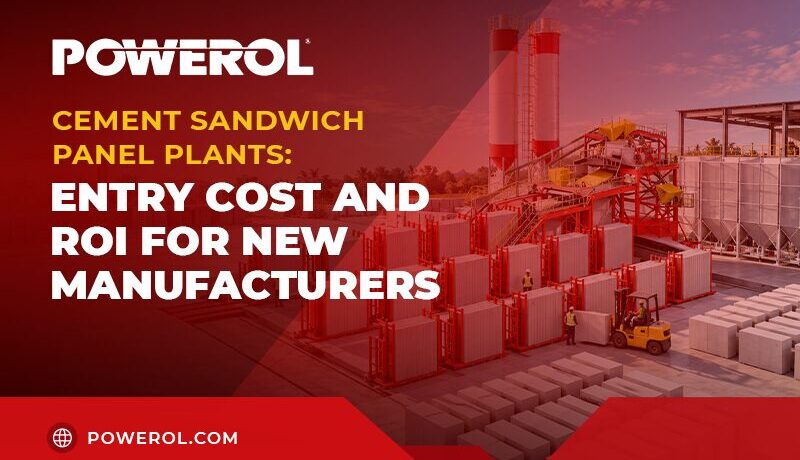
Cement Sandwich Panel Plants: Entry Cost and ROI for New Manufacturers
Prefabricated and sustainable construction is reshaping how industrial buildings, warehouses, affordable housing, and infrastructure projects are delivered across India, the Middle East, Africa, and other fast-growing markets. The result is a surge in demand for cement sandwich panels ,lightweight, insulated wall and roof systems that offer speed, durability, and energy efficiency.
For building material manufacturers, prefab construction companies, EPC contractors, and investors, setting up a cement sandwich panel plant is an attractive way to tap into this demand. Yet key questions remain: What is the entry cost? How profitable is the business? How do you choose between manual, semi-automatic, and automatic systems? And which manufacturer can provide a reliable turnkey solution?
This blog breaks down the investment, operating costs, production potential, and ROI of a cement sandwich panel manufacturing plant , while positioning Powerol as a trusted partner for turnkey, high-efficiency panel production solutions.
What a Cement Sandwich Panel Plant Manufactures?
A cement sandwich panel plant produces prefab wall and roof panels comprising a cementitious outer layer with an insulating core (commonly EPS, foam, or lightweight aggregates). These cement sandwich panels and concrete sandwich panels are used for:
- Industrial buildings, logistics hubs, and warehouses
- Affordable housing and mass housing schemes
- Commercial blocks, schools, and hospitals
- Boundary walls, security cabins, and modular structures
- Precast wall panel systems for fast-track infrastructure projects
Compared to conventional masonry, cement sandwich panels deliver faster construction, lower labor requirements, better thermal and acoustic performance, and consistent quality,making them ideal for developers and EPC contractors focused on speed and lifecycle cost savings.
A modern sandwich panel manufacturing plant typically includes a sandwich panel production line , prefab wall panel plant machinery, and a combination of batching, mixing, molding, curing, and handling equipment designed for continuous, scalable output.
Entry Cost Breakdown: What Does a Cement Sandwich Panel Plant Cost?
The entry cost of a cement sandwich panel manufacturing plant varies significantly based on capacity, level of automation, and the range of products you plan to produce. Instead of quoting fixed numbers, it is more useful to understand the major investment components that determine your total project cost.
Key cost elements include:
- Core Machinery and Production Line
- Cement wall panel machines and molds
- Panel casting or extrusion equipment
- Conveyors, handling systems, and stacking systems
- Curing racks, chambers, or yards
- Quality control and testing equipment
Higher automation levels, such as an automated sandwich panel plant , add PLC controls, automated dosing, material handling, and inline inspection systems.
- Cement Batching and Mixing Systems
- or integratedCement batching plantready mix concrete plant
- Aggregate storage, weighing, and feeding equipment
- Mixers suitable for lightweight or fiber-reinforced concrete
- Water dosing and admixture systems
Selecting efficient concrete plant manufacturers and batching solutions directly impacts mix consistency, material utilization, and panel quality.
- Molds, Pallets, and Tooling
- Panel molds and formwork systems for different thicknesses and lengths
- Steel pallets, vibration tables, or tilting tables
- Core material feeding and distribution equipment
The number of molds and their configuration dictate your line’s peak capacity and ability to handle custom panel sizes.
- Civil Works and Utilities
- Factory shed, foundations, curing area, storage zones
- Electrical infrastructure, transformers, and power distribution
- Water supply, drainage, and firefighting systems
- Compressed air, steam (if needed), and ventilation
Optimized civil design can reduce material handling distances and improve workflow, enhancing overall efficiency.
- Installation, Commissioning, and Training
- Machinery erection and alignment
- Electrical and control panel setup
- Trial runs, performance testing, and acceptance
- Operator and maintenance training
Turnkey providers like Powerol can significantly reduce ramp-up time by handling engineering, installation, commissioning, and training end-to-end.
- Working Capital and Ancillary Equipment
- Raw materials: cement, aggregates, EPS/insulation, admixtures
- Forklifts, cranes, and material handling vehicles
- Packaging, storage racks, and logistics infrastructure
- Initial stock of spare parts and consumables
Together, these components define the entry cost of your cement sandwich panel plant . The exact figure depends on whether you choose a manual, semi-automatic, or fully automatic sandwich panel production line , and the output you are targeting.
Manual vs Semi-Automatic vs Automatic: Which Plant Type Should You Choose?
Choosing between manual, semi-automatic, and fully automatic systems is central to your investment and ROI strategy.
Manual Cement Sandwich Panel Plant
A manual prefab wall panel plant relies heavily on labor for batching, mixing, mold filling, leveling, and demolding.
Key characteristics:
- Lower initial machinery cost
- Higher dependence on skilled labor
- Slower cycle times and lower daily output
- Greater variability in panel dimensions and finish
- Higher risk of quality issues and rework
Best suited for small regional manufacturers or start-ups testing local demand with limited capital, but may be constrained as volumes grow.
Semi-Automatic Sandwich Panel Manufacturing Plant
Semi-automatic plants integrate automated batching, mixing, and some aspects of mold filling and handling, while retaining manual steps in areas like core placement or finishing.
Key characteristics:
- Balanced capex with improved productivity
- More consistent quality and dimensional control
- Partial automation in critical processes (mixing, dosing, material flow)
- Moderate labor requirements and better ergonomics
Ideal for manufacturers targeting mid-range capacities, diversified product portfolios, and gradually increasing automation as demand grows.
Fully Automatic Cement Sandwich Panel Production Line
A fully automatic automated sandwich panel plant employs PLC-controlled material dosing, automated mold filling, compaction, core insertion, curing, and handling, with integrated quality checks.
Key characteristics:
- Highest productivity and throughput per shift
- Reduced labor requirements and lower per-panel labor cost
- Superior repeatability and minimal human error
- Better energy management and material utilization
- Easier integration with insulated concrete panel production lines and other precast systems
Preferred by large building material manufacturers, modular construction companies, and export-oriented plants aiming for high capacity, consistent quality, and long-term scalability.
Comparison Table: Plant Capacity and Ideal Business Profiles
Below is an indicative comparison of plant types, capacities, and typical applications. This table is for strategic guidance rather than fixed values.
| Plant Type | Typical Daily Output* | Ideal Business Profile | Labor Intensity | Automation Level | Scalability |
| Manual | Low (small regional demand) | Local suppliers, pilot plants, budget-sensitive units | High | Basic | Limited |
| Semi-Automatic | Medium | Regional manufacturers, growing prefab brands | Moderate | Intermediate | Good |
| Fully Automatic | High | Large manufacturers, export plants, EPC-linked units | Low | Advanced (PLC, sensors) | Excellent |
Actual output depends on shift pattern, panel size, curing cycle, and product mix.
When evaluating options, align your sandwich panel manufacturing plant type with your target market, project pipeline, and growth ambitions rather than focusing only on initial cost.
Key Factors Influencing ROI of a Cement Sandwich Panel Plant
Instead of fixed profit claims, smart investors evaluate the ROI of a cement sandwich panel plant based on measurable operational and market factors. Core drivers include:
- Production Capacity and Utilization
Higher capacity plants can serve larger projects and multiple regions, but ROI depends on how consistently you utilize the capacity. EPC contracts, long-term supply agreements, and distributor networks help stabilize demand.
- Labor Savings and Automation
Automation reduces per-unit labor cost, minimizes rework, and stabilizes output quality. Over time, these savings significantly influence profitability, especially in regions with rising wage levels.
- Material and Energy Efficiency
Efficient batching and mixing systems reduce cement overuse, improve aggregate grading, and optimize core material usage. Energy-efficient motors, drives, and curing solutions lower operating costs per panel.
- Market Demand and Pricing Power
In fast-growing markets like India, the Middle East, and Africa, demand for cement sandwich panels is supported by industrial expansion, warehousing, affordable housing schemes, and infrastructure projects. Ability to supply high-quality, certified panels supports better pricing and margins.
- Product Quality and Brand Reputation
Consistent quality, structural performance, and finishing enable you to work with reputed developers, EPC contractors, and government projects. Over time, strong brand perception improves order volume and customer retention.
- Line Flexibility and Customization
Plants that can offer multiple panel sizes, thicknesses, insulation cores, and surface finishes tap a wider range of applications,from boundary walls to insulated building envelopes. Flexibility adds revenue streams and protects margins.
- Maintenance, Downtime, and After-Sales Support
Planned maintenance, reliable spare parts supply, and prompt technical support reduce unplanned downtime. A plant backed by strong after-sales support maintains stable output and predictable cash flows, directly boosting ROI.
By carefully planning capacity, automation, and market strategy, a sandwich panel manufacturing business can achieve attractive payback periods and long-term profitability.
Machinery Required for Cement Sandwich Panel Production
A typical cement sandwich panel plant integrates multiple machinery systems into a cohesive panel manufacturing line . Major machinery categories include:
- Cement batching plant / concrete plant for accurate mix preparation
- Mixers designed for lightweight concrete, fiber-reinforced mixes, or specialty formulations
- Cement wall panel machines and molds for different panel geometries
- Core material feeding systems for EPS, foam, or lightweight aggregates
- Vibration tables, tilting tables, or extrusion systems for compaction
- Curing racks or chambers with controlled temperature and humidity
- Cutting, finishing, and edge treatment equipment (if required)
- Material handling equipment: conveyors, cranes, forklifts, and stackers
- Quality control instruments for dimensional checks, compressive strength, and adhesion tests
Turnkey providers like Powerol consolidate these elements into a unified sandwich panel production line , ensuring mechanical, electrical, and control systems work together seamlessly.
Why Powerol for Turnkey Cement Sandwich Panel Plants?
As a trailblazer in the Indian construction machinery industry, Powerol brings together industry expertise and innovative engineering to deliver reliable concrete and asphalt construction machinery . Extending this capability to cement sandwich panel plants , Powerol offers:
- Turnkey Plant Design and Engineering
End-to-end plant layout, capacity planning, and machinery selection tailored to your market, product mix, and available land and utilities. - High-Efficiency, Scalable Panel Production Solutions
From manual starter plants to fully automated prefab wall panel plants , Powerol designs production lines that are scalable as demand grows, optimizing cycle times and material flows. - Automation and Quality Control
Integration of automation in batching, dosing, mold filling, and handling for consistent quality and reduced labor dependency, with robust quality control systems to meet project specifications and standards. - Customization for Domestic and Export Markets
Ability to configure sandwich panel manufacturing plants for different regional requirements across India, the Middle East, Africa, and other developing markets, including insulation types, panel sizes, and local standards. - Installation, Commissioning, and Training
Expert teams manage installation and commissioning at your manufacturing locations, followed by comprehensive training for operators, supervisors, and maintenance teams to ensure smooth ramp-up. - Long-Term After-Sales Support
Ongoing technical support, spare parts, and upgrades to keep your cement sandwich panel plant running efficiently and aligned with new market opportunities.
With prestigious global clients and robust manufacturing capabilities, Powerol positions itself as a trusted partner for entrepreneurs, building material manufacturers, and EPC players looking to power their prefab wall panel business for the long term.
To explore Powerol’s Cement Sandwich Panel Plant and related machinery solutions, visit the products section on Powerol and navigate to the relevant panel production systems.
Buyer’s Checklist: Evaluating a Cement Sandwich Panel Plant
Before finalizing your investment, use this practical checklist to compare options and reduce risk:
- Have you defined your target market segments (industrial, housing, export, infrastructure)?
- Is the proposed plant capacity aligned with realistic demand and your sales pipeline?
- Do you understand the differences between manual, semi-automatic, and automatic systems,and their impact on labor, quality, and output?
- Are batching and mixing systems optimized for your raw materials and product specifications?
- Does the plant layout minimize handling distances and support safe, ergonomic operation?
- Is there clear provision for future scalability (extra molds, extended curing capacity, automation upgrades)?
- What level of automation is included in core processes (dosing, filling, handling, curing)?
- Are quality control systems and testing protocols clearly defined?
- Does the manufacturer provide detailed installation, commissioning, and training support?
- Is after-sales support, spare parts availability, and maintenance guidance documented?
Manufacturers like Powerol that offer transparent engineering, clear capacity planning, and strong post-commissioning support make your investment more secure and your ROI more predictable.
FAQs
1. How much does a cement sandwich panel plant cost?
The cost of a cement sandwich panel plant depends on plant capacity, level of automation (manual, semi-automatic, or automatic), and your required product mix. Major contributors include machinery, batching systems, molds, civil works, utilities, installation, and working capital. Instead of focusing on a single number, Powerol helps you model your investment based on capacity targets, market demand, and automation preferences.
2. Is a sandwich panel manufacturing business profitable?
Yes, a well-planned sandwich panel manufacturing business can be profitable, especially in regions with growing demand for prefabricated and sustainable construction. Profitability is driven by consistent capacity utilization, efficient material and energy use, automation-led labor savings, strong quality control, and reliable demand from projects and distributors.
3. What affects the ROI of a sandwich panel plant?
Key ROI drivers include plant capacity and utilization, labor and energy efficiency, material optimization, market demand, pricing, and maintenance. Automation level, brand reputation, and after-sales support also play an important role in stabilizing output and maximizing long-term returns.
4. What machinery is required for cement sandwich panel production?
You need a combination of batching and mixing systems, cement wall panel machines , molds, core material feeding equipment, compaction systems, curing racks, material handling equipment, and quality control instruments. Turnkey solutions like those offered by Powerol integrate these into a coherent sandwich panel production line .
5. Which manufacturer should I choose for a cement sandwich panel plant?
Look for a manufacturer with proven experience in concrete plant manufacturing , panel production machinery, and turnkey project delivery. The ideal partner offers end-to-end engineering, automation, customization, installation, commissioning, and long-term after-sales support. Powerol, with its strong footprint in construction machinery and global clientele, is well-positioned to deliver turnkey sandwich panel plants and related machinery for domestic and export markets.
Ready to Invest in a Cement Sandwich Panel Plant?
If you are a building material manufacturer, prefab construction company, entrepreneur, EPC contractor, or investor evaluating cement sandwich panel production, the right plant design and partner can transform your business.
Powerol helps you:
- Define the right plant capacity for your market
- Choose between manual, semi-automatic, and fully automatic production lines
- Optimize batching, panel machinery, and layout for efficiency and quality
- Commission high-performance prefab wall panel plants with robust automation and quality control
- Build a scalable, future-ready panel manufacturing business serving India and global markets
To explore Powerol’s Cement Sandwich Panel Plant and associated machinery solutions, visit the products section on Powerol and connect with the team via the contact page to discuss your project, capacity goals, and ROI roadmap.