
- Your cart is empty Browse Shop
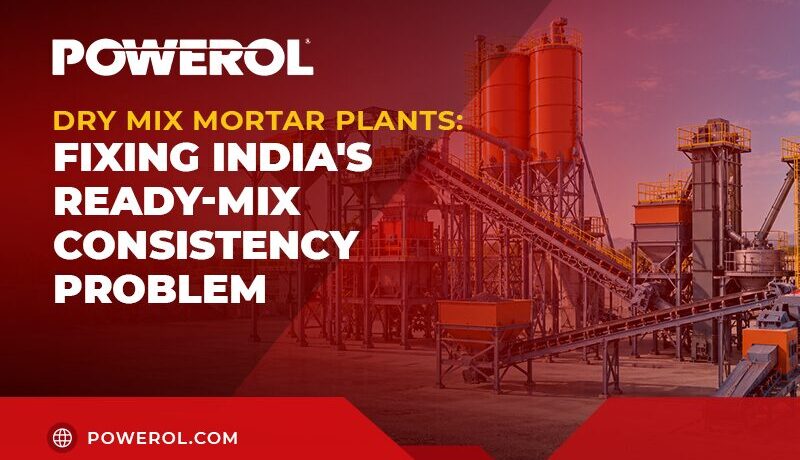
Dry Mix Mortar Plants: Fixing India’s Ready-Mix Consistency Problem
Dry mix mortar plants are rapidly becoming the backbone of modern construction materials manufacturing in India, solving chronic problems of inconsistent quality, high wastage, and low production efficiency. By investing in an automated dry mix mortar plant , manufacturers and investors can transform their ready-mix business into a scalable, high-margin, and export-ready operation ,and this is exactly where Powerol , an Indian dry mortar plant manufacturer , stands out as a trusted turnkey partner.
Dry Mix Mortar Plants: Fixing India’s Ready-Mix Consistency Problem
India’s construction boom ,driven by large-scale infrastructure projects, affordable housing, smart cities, commercial real estate, and industrial development ,is putting enormous pressure on material quality and consistency. As contractors move away from on-site manual mixing, demand for factory-produced dry mix mortar has surged across metro cities, Tier-2/3 towns, and export markets in the Middle East, Africa, and Southeast Asia.
For manufacturers, this shift creates both an opportunity and a risk. Those still relying on manual or semi-mechanized mortar production face issues like variable quality, high labor dependency, and low capacity utilization. By contrast, automated dry mix mortar manufacturing plants offer standardized quality, predictable performance, and scalable profitability.
This blog explains what a dry mix mortar plant is, how it works, which products you can manufacture, and how to choose the right plant configuration. It also shows how Powerol delivers turnkey, high-performance dry mortar plants tailored to modern construction markets.
What is a Dry Mix Mortar Plant?
A dry mix mortar plant is a factory-scale production system that precisely blends dried sand, cement, fillers, and chemical additives to produce ready-to-use mortars. These mortars only require the addition of water at the job site.
Unlike on-site mixing, where sand, cement, and water are mixed manually or with basic mixers, a dry mortar plant uses automated dosing, weighing, mixing, and packing equipment to deliver consistent, high-quality mortar in bags or bulk.
In simple terms, it is a dry mortar production line that converts raw materials into engineered products like tile adhesives, wall putty, plaster, repair mortars, and waterproofing mortars ,with repeatable quality and controlled performance.
Why Manual Mortar Mixing Fails Modern Construction?
Manual and site-based mixing is still common on smaller projects, but it creates several structural problems that clash with today’s performance-driven construction:
- Inconsistent mortar quality : Variations in sand moisture, improper cement–sand ratio, and non-uniform mixing produce unpredictable strength, workability, and adhesion. This leads to hollow tiles, cracks, debonding, and frequent rework.
- High material wastage and rework : Over- or under-sanding, spillage, and trial-and-error mixing at site directly increase material consumption and labor costs.
- Rising labor costs and shortages : Skilled masonry labor is becoming expensive and harder to retain, especially for large infrastructure and high-rise projects.
- Lack of standardized product quality : Brands relying on manual batching struggle to build a reputation for consistent quality across projects and geographies.
- Low production efficiency and downtime : Small batch sizes, manual batching, and frequent setup changes limit output and reduce profitability.
With buyers demanding premium, performance-based products such as tile adhesive, polymer-modified plasters, and high-strength repair mortars, manual mixing is no longer competitive. This is pushing manufacturers toward fully engineered dry mix mortar plants .
Why Dry Mix Mortar is More Consistent than Site Mixing?
Factory-produced dry mortar delivers consistency because of four core advantages:
- Controlled raw materials : Dried and graded sand, standardized cement types, and controlled additives eliminate moisture and gradation variability.
- Automated dosing and weighing : PLC-controlled batching systems accurately weigh each ingredient according to a predefined recipe, ensuring uniformity from batch to batch.
- High-intensity mixing : Dedicated mixers ensure homogenous blending in a short time, improving performance and reducing segregation.
- Standardized quality control : Laboratory testing, retained sample analysis, and batch traceability ensure product consistency and faster troubleshooting.
For construction chemical brands, tile adhesive manufacturers, and wall putty producers, this level of consistency is critical to building market trust and reducing on-site complaints.
How Does a Dry Mix Mortar Plant Work?
A modern dry mix mortar plant typically follows a well-defined process flow:
- Raw material handling and storage
Cement is stored in silos; sand is dried, screened, and stored in silos or bins; fillers (like limestone powder) and additives are stored in silos or bags. - Sand drying and screening
A dryer system removes moisture from sand to ensure stable product performance. Screening ensures controlled particle size distribution. - Batching and weighing
Load cells and dosing equipment accurately weigh cement, sand, fillers, and chemical additives as per recipe. - Mixing
A high-efficiency mixer (single-shaft, twin-shaft, or ploughshare) blends all components into a uniform dry mix. - Storage and packing
The finished dry mix is transferred to storage silos and then fed into packing machines (valve bag, open-mouth, jumbo bags) or bulk tanker loading. - Automation and control
A centralized PLC/SCADA system monitors recipes, batching, mixing time, alarms, production data, and maintenance logs.
This complete set-up ,from raw material feeding to finished bagged products ,is what Powerol delivers as a turnkey dry mortar plant solution.
Key Components of a Dry Mix Mortar Manufacturing Plant
A typical dry mix mortar manufacturing plant includes:
- Raw material silos (cement, sand, fillers)
- Sand drying and screening unit
- Additive feeding systems (screw feeders, small-scale dosing units)
- Weighing and batching systems with load cells
- High-performance mortar mixer
- Finished product silos
- Automatic packing machines and palletizing (optional)
- Dust collection systems for cleaner and safer operations
- Control panel with PLC/SCADA for automation and recipe control
As a dry mortar plant manufacturer , Powerol engineers these components as an integrated system to deliver optimal throughput, quality, and energy efficiency.
Products You Can Manufacture in a Dry Mix Mortar Plant
A dry mix plant allows you to diversify into a full portfolio of value-added products, such as:
- Tile adhesives (standard, polymer-modified, high-performance)
- Wall putties (cement-based, polymer-modified)
- Plastering mortars (internal and external plasters, lightweight plasters)
- Masonry mortars (brick/block laying mortars)
- Repair mortars (non-shrink, structural repair mortars)
- Waterproofing mortars and screeds
- Skim coats and finishing mortars
- Grouts and self-leveling compounds (with suitable formulations and equipment)
With the right plant design and recipe management, manufacturers can leverage a single dry mortar production line to serve both domestic and export markets.
Manual Production vs Automated Dry Mix Mortar Plant
Below is a simple comparison of manual production versus an automatic dry mortar plant:
| Parameter | Manual / Site Mixing | Automated Dry Mix Mortar Plant |
| Mix ratio control | Based on volume/experience, highly variable | Weight-based, PLC-controlled, highly accurate |
| Product consistency | Low; batch-to-batch variation | High; repeatable quality across batches |
| Labor dependency | High, with skill variability | Low; operators focus on monitoring and supervision |
| Material wastage | High due to spillage, overuse, rework | Low; optimized recipes and controlled dosing |
| Production capacity | Low to moderate | Moderate to very high, scalable |
| Dust and safety | Poor dust control, manual handling | Integrated dust collection and closed handling |
| Product portfolio | Basic mortars only | Full range of premium mortars and construction chemicals |
| Brand positioning | Commodity supplier | Technology-driven, premium product manufacturer |
For manufacturers targeting national brands, institutional projects, EPC contractors, and exports, automated drymix mortar plants are clearly superior.
Plant Capacity and Automation Levels: Choosing What’s Best for Your Business
One of the key decisions for buyers is selecting the right mortar plant capacity and automation level. Below is a conceptual overview to guide thinking:
| Segment | Typical Capacity Range (TPH)* | Automation Level | Ideal For |
| Entry / Starter Plants | 3–5 TPH | Semi-automatic | New entrepreneurs, niche local markets, startup brands |
| Growth / Mid-Level | 8–15 TPH | Semi-automatic to automatic | Regional brands, cement companies, construction chemical SMEs |
| Large / Export-Oriented | 20+ TPH | Fully automatic with SCADA | National brands, export units, multi-product manufacturers |
TPH = Tons per hour (illustrative ranges; exact sizes vary by design and requirement).
An experienced dry mix mortar plant supplier like Powerol helps you align plant design with your product roadmap, market ambitions, and investment capacity.
Automation, Batching Accuracy, Energy Efficiency, and Dust Control
Modern automatic dry mortar plants are designed to maximize output while minimizing operating cost and environmental impact:
- Automation and recipe control : PLC-based control systems automate dosing, mixing, and packing with recipe management, batch reports, and alarms. This reduces operator error and simplifies multi-product manufacturing.
- Batching accuracy : High-precision load cells and feeders ensure that even small percentages of additives are dosed accurately, which is critical for performance products like tile adhesives and repair mortars.
- Energy efficiency : Optimized drying systems, efficient burners, proper insulation, and intelligent plant layout reduce energy consumption per ton of mortar.
- Dust collection and safety : Centralized dust collection, proper sealing, and ergonomic material handling improve working conditions, reduce product loss, and help meet environmental norms.
- Reduced downtime : Robust engineering, easy maintenance access, and planned service intervals minimize unplanned stoppages.
Powerol designs its dry mortar machinery with these factors at the core, so you get better ROI over the life of the plant.
Powerol: Turnkey Dry Mortar Plant Manufacturer from India
As a dry mortar plant manufacturer with strong roots in the Indian construction machinery industry, Powerol specializes in delivering turnkey, high-performance solutions that are tailored to real-world production challenges.
Key strengths include:
- Turnkey engineering : From concept, layout and detailed engineering to equipment selection and integration, Powerol delivers end-to-end turnkey dry mortar plant solutions.
- Customization : Plants are configured for specific product portfolios (tile adhesive, wall putty, plasters, waterproofing mortars, etc.), raw material characteristics, and target markets (India, Middle East, Africa, Southeast Asia).
- Installation and commissioning : On-site installation, alignment, testing, and commissioning ensure a smooth start-up and faster ramp-up to target capacity.
- Operator training : Hands-on training on plant operation, recipe management, safety, and basic maintenance empowers your team to run the plant efficiently.
- Spare parts and after-sales support : Ongoing technical support and spare parts availability minimize downtime and safeguard production continuity.
For manufacturers planning a greenfield dry mix mortar manufacturing plant or upgrading an existing setup, Powerol’s integrated approach reduces project risk and accelerates time-to-market.
Buyer’s Checklist: Selecting the Right Dry Mix Mortar Plant
Before investing in a dry mix mortar plant , decision makers should evaluate:
- Target markets and product mix : Which products (tile adhesive, wall putty, plasters, repair mortars) will you start with, and which will you add later?
- Required capacity and future expansion : What output (TPH or tons per day) do you need now, and how will this grow over 3–5 years?
- Level of automation : Semi-automatic vs fully automatic, based on labor availability, required consistency, and reporting needs.
- Raw material characteristics : Sand moisture, gradation, availability of fillers, and additives influence plant design and dryer selection.
- Space and utilities : Site layout, power availability, fuel type for the dryer, and material logistics.
- Quality control and lab setup : In-house lab capabilities to support consistent product development and testing.
- Technical support and after-sales : The ability of your dry mix mortar plant supplier to provide engineering, training, spares, and remote support.
Working with a seasoned partner like Powerol helps ensure that all these factors are considered and translated into a robust, future-ready plant configuration.
FAQs
1. What is a dry mix mortar plant?
A dry mix mortar plant is an industrial facility that automatically doses, mixes, and packs dry ingredients like sand, cement, fillers, and additives to produce ready-to-use mortars that only require water at the project site.
2. Why is dry mix mortar more consistent than site mixing?
Dry mix mortar uses dried, graded raw materials, accurate weight-based batching, high-intensity mixing, and lab-tested formulations, resulting in far more consistent quality than manual or volume-based site mixing.
3. How does a dry mortar plant work?
A dry mortar plant dries and screens sand, stores raw materials in silos, weighs and batches ingredients according to a recipe, mixes them in a dedicated mixer, and then stores and packs the finished dry mix into bags or bulk using automated systems.
4. What products can be manufactured in a dry mix mortar plant?
Products include tile adhesives, wall putty, plastering mortars, masonry mortars, repair mortars, waterproofing mortars, skim coats, and other specialized construction chemicals, depending on the plant configuration and formulations.
5. Which dry mortar plant is best for my business?
The best plant depends on your target capacity, product range, level of automation desired, budget, and market strategy. Entry-level plants suit startups, while fully automatic high-capacity plants suit national brands and export-oriented manufacturers. A specialist dry mortar plant manufacturer like Powerol can help you select the right configuration.
6. What factors affect dry mortar plant costs?
Plant cost is influenced by capacity, level of automation, type of sand dryer, number and size of silos, packing systems, level of dust control, lab and quality control requirements, and the degree of customization needed.
Ready to Build a High-Performance Dry Mix Mortar Business?
India’s demand for high-quality, factory-produced mortar is only going to increase as infrastructure, housing, and industrial projects scale up and performance specifications tighten. At the same time, export markets across the Middle East, Africa, and Southeast Asia are actively seeking reliable suppliers of premium dry mix mortars.
Investing in a modern dry mix mortar plant is no longer optional for serious manufacturers ,it is a strategic move to secure market share, protect margins, and build a durable brand.
If you are exploring a new dry mix mortar manufacturing plant , upgrading your existing mortar plant , or adding tile adhesive and wall putty to your portfolio, partner with Powerol for a customized, turnkey solution backed by strong engineering and lifecycle support.