

- Your cart is empty Browse Shop
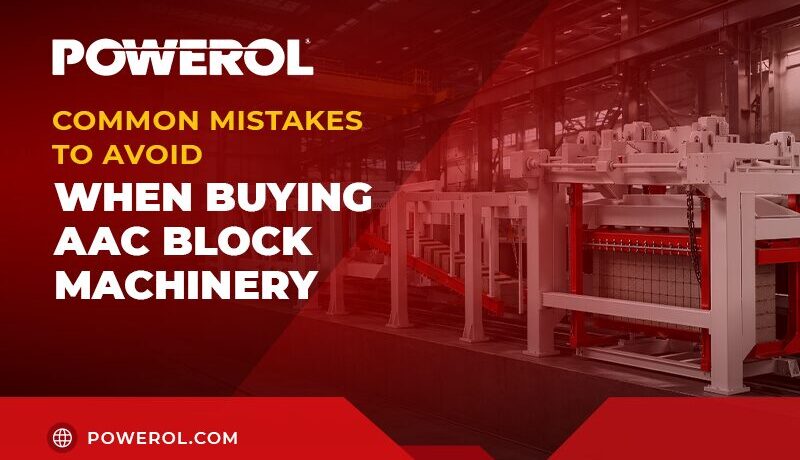
Common Mistakes to Avoid When Buying AAC Block Machinery
If you are planning to invest in AAC block machinery for the first time, the decision can feel risky. You are committing lakhs or even crores to a plant you expect to run reliably for years, yet the market is full of confusing claims, unclear pricing, and mixed feedback from buyers. In this guide, we will unpack the biggest mistakes entrepreneurs, contractors, and investors make when purchasing AAC block plant machinery in India and show you how a reliable AAC plant manufacturer can help you get it right from day one.
What Is AAC Block Machinery and Why the Buying Decision Matters
AAC block machinery is the integrated set of equipment that converts raw materials like fly ash, cement, lime, gypsum, and aluminium powder into lightweight Autoclaved Aerated Concrete (AAC) blocks at scale. A typical AAC block production line includes batching and mixing systems, moulds, cutting machines, autoclaves, material handling systems, and automation controls.
Choosing the wrong AAC block making machine is not just a technical error, it can directly affect your business profitability, plant uptime, and ability to meet growing demand in high-activity states like Gujarat, Maharashtra, Tamil Nadu, Andhra Pradesh, Rajasthan, Karnataka, Telangana, and Delhi NCR. With the push from government schemes like Pradhan Mantri Awas Yojana (PMAY), Smart Cities Mission, and other affordable housing initiatives, demand for AAC blocks is rising. If your AAC block manufacturing machine cannot keep up, breaks down frequently, or produces inconsistent quality, you lose orders precisely when the market is growing.
A reliable partner like Powerol , with deep experience in concrete and construction machinery, helps you avoid these costly mistakes by aligning plant design, capacity, and automation level with your actual business plan — not just today’s budget.
Mistake 1: Choosing AAC Block Plant Capacity Without Calculating Real Demand
Most first-time buyers ask, “What capacity AAC block plant should I buy?” but then choose based on price, not on demand projections. This is one of the most expensive mistakes in an AAC block manufacturing business.
In simple terms, capacity should be driven by three things: your target market, your sales strategy, and your realistic production planning — not just installed machinery size.
Common capacity mistakes
Mistake 1.1: Under-sizing the AAC block plant
Many investors choose a very small AAC block plant “to test the market.” The problem is that AAC block demand is usually driven by large projects: PMAY housing, Smart Cities projects, private townships, industrial parks, and institutional buildings. If your plant capacity is too small to service even one medium project consistently, buyers will not rely on you, even if your quality is good.
Mistake 1.2: Over-sizing without sales and logistics planning
At the other extreme, some investors rush into very large AAC block machinery capacity assuming “more is always better.” Without a clear plan for sales channels, transport logistics, and regional coverage in states like Gujarat or Tamil Nadu, you end up with idle capacity, high energy and labour costs, and blocked capital.
Mistake 1.3: Ignoring plant utilization
Theoretical capacity is not equal to actual output. Breakdown, maintenance, power cuts, and untrained operators can bring actual production to 60–70% of rated capacity. When Powerol designs an AAC block production line, they consider realistic utilization and help you size the plant based on achievable daily and monthly tonnage so you don’t miscalculate ROI.
Mistake 2: Buying on Price Alone — The Hidden Costs of Cheap AAC Block Machinery
Many buyers compare AAC block plant cost only on the initial quotation, not on lifecycle cost. This is precisely how you end up spending more in the long run.
Why “cheapest” is rarely “lowest-cost”
Mistake 2.1: Ignoring breakdowns and downtime
Low-cost AAC block making machines often use inferior steel, poor-quality components, and unproven designs. The result: frequent breakdowns, higher scrap, and production stoppages. Each day of downtime means lost revenue, penalties with contractors, and damage to your reputation in competitive markets like Delhi NCR or Telangana.
Mistake 2.2: Overlooking power and material wastage
AAC block machinery that is not engineered properly tends to consume more power, waste more fly ash and cement, and produce more rejects. The extra per-block cost quietly eats into your margin, especially when servicing price-sensitive segments like government housing under Pradhan Mantri Awas Yojana.
Mistake 2.3: Not factoring spares and maintenance
AAC block plant cost must include availability and pricing of spare parts, ease of maintenance, and local support. A cheap machine without a reliable spare parts network will cost you more in emergency imports, local fabrication, and unplanned shutdowns. Experienced manufacturers like Powerol design their AAC block plant setup in India with standardized components and strong after-sales networks so your total cost of ownership stays under control.
Mistake 3: Ignoring Automation Level vs Production Target Mismatch
One of the most confusing decisions for new buyers is choosing between manual, semi-automatic, and fully automatic AAC block manufacturing machine configurations. The wrong decision here can trap you in high labour costs or low output.
Manual vs semi-auto vs fully automatic AAC block making machines
Mistake 3.1: Choosing manual for high-volume targets
A manual or very low-automation AAC block making machine might look attractive due to lower AAC block plant cost. But if your business plan targets consistent supply to builders and government projects, manual handling quickly becomes a bottleneck. Human error in batching, mixing, cutting, or curing leads to inconsistent density and strength, compromising your product quality.
Mistake 3.2: Over-automating without skilled staff
On the other hand, jumping directly to a highly sophisticated, fully automated autoclaved aerated concrete machinery India setup without planning for skilled operators and maintenance engineers can also cause trouble. If your team is not trained, simple issues become major stoppages.
Mistake 3.3: Not aligning automation with labour and safety goals
Labour availability varies by region — for example, some plants in Maharashtra or Rajasthan struggle with skilled manpower. Automation choices must balance local labour costs, safety norms, and production targets. A seasoned AAC plant manufacturer in India like Powerol helps you decide the optimum automation level that matches your target capacity, labour scenario, and payback period instead of pushing one standard configuration.
Mistake 4: Not Verifying Manufacturer Credibility and Track Record
AAC block machinery is a long-term partnership, not a one-time purchase. Yet many buyers spend more time comparing prices than validating manufacturer credibility.
What to verify before trusting an AAC plant manufacturer in India
Mistake 4.1: Not checking existing installations
Ask for site references and, wherever possible, visit running plants. Check how long the AAC block plant has been in operation, how often it faces breakdowns, and how satisfied the owners are with equipment and service.
Mistake 4.2: Ignoring cross-industry experience
Manufacturers with strong experience in concrete and asphalt equipment, like Powerol, bring deeper process knowledge, robust engineering, and proven manufacturing systems. This background is especially important when handling abrasive materials like fly ash and when designing cutting and autoclave systems that must withstand demanding Indian conditions.
Mistake 4.3: Overlooking export and international standards
If you are an overseas buyer or planning to export AAC blocks, you must ensure your supplier’s autoclaved aerated concrete machinery in India meets relevant international norms and performance expectations. Verify certifications, quality systems, and the manufacturer’s experience with global clients.
Mistake 5: Skipping After-Sales Support and Spare Parts Discussion
Many buyers focus on technical specifications and AAC block plant cost but hardly discuss after-sales commitments in detail. This is risky.
Essential after-sales support from an AAC block machinery manufacturer
Mistake 5.1: No clear SLA for response time
Ask, “What is your typical response time if my plant stops?” and “Do you have remote diagnostics or on-site engineers in my region?” A robust manufacturer clearly defines support timelines and escalation paths.
Mistake 5.2: Not checking spare parts stocking policy
You should know which parts are stocked locally, what lead times apply for imported items, and whether there is a recommended spares kit for the first year. A strong player like Powerol emphasizes availability of critical spares for their AAC block machinery to minimise downtime.
Mistake 5.3: Ignoring long-term service plans
Look for annual maintenance contracts (AMC), periodic health checks, and training refreshers. Reliable AAC block plant manufacturers in India don’t disappear after commissioning; they support your plant across its lifecycle.
Mistake 6: Not Asking About Installation, Commissioning, and Operator Training
AAC block plant setup in India is not just about supplying machines. Successful commissioning requires structured installation, process stabilisation, and operator training.
Why installation and training make or break your AAC block manufacturing business?
Mistake 6.1: Assuming local contractors can handle everything
Mechanical and civil contractors can assemble hardware, but AAC block production line commissioning requires process know-how: correct batching ratios, cutting cycle optimisation, autoclave curing profiles, and quality control. Without the manufacturer’s commissioning team, you risk chronic quality issues.
Mistake 6.2: Neglecting operator training
Untrained operators may misuse equipment, bypass safety interlocks, or change recipe parameters without understanding the effects. Professional AAC plant manufacturers like Powerol include operator and supervisor training in their scope, covering machine operation, safety, maintenance, and basic troubleshooting.
Mistake 6.3: No documentation and SOPs
Demand detailed manuals, standard operating procedures (SOPs), maintenance schedules, and troubleshooting guides. This documentation helps you maintain consistent output even when staff changes.
Mistake 7: Overlooking Raw Material Compatibility and Local Availability
AAC block quality depends heavily on raw materials — especially fly ash from nearby thermal power plants, lime, cement, gypsum, and aluminium powder. Yet many buyers lock into a machine specification without validating raw material realities.
Matching AAC block machinery to your raw materials
Mistake 7.1: Not testing local fly ash
Fly ash quality varies widely across India’s thermal power plants. Before finalising your AAC block manufacturing machine, you should test your local fly ash for fineness, LOI (loss on ignition), and chemical composition. A good manufacturer will adjust mix design and process parameters to suit your actual material.
Mistake 7.2: Ignoring availability and logistics
If your AAC block plant depends on fly ash from a distant thermal power station, your logistics cost and supply risk increase. Your plant layout, storage silos, and batching systems must be sized considering real supply conditions.
Mistake 7.3: Not planning for future material variations
Over time, the source or quality of fly ash may change. Robust AAC block machinery and process control can handle reasonable variation without impacting block strength, density, and finish. Powerol’s engineering approach is to design systems that work consistently across realistic Indian raw material scenarios, not just ideal lab conditions.
Quick Buyer Checklist: 10 Things to Check Before Buying an AAC Block Plant
Use this quick checklist before you sign any purchase order for an AAC block plant:
- Have you calculated realistic demand in your target region (e.g., Gujarat, Maharashtra, Tamil Nadu, Delhi NCR) and matched it with plant capacity and utilization?
- Have you compared AAC block plant cost on lifecycle basis — including energy, labour, spares, downtime, and maintenance — not just on initial quote?
- Is the chosen automation level (manual, semi-auto, or fully automatic) aligned with your production targets, labour availability, and safety goals?
- Have you visited at least one running AAC block plant supplied by this manufacturer and spoken directly to the owners?
- Is the manufacturer experienced in heavy concrete and construction equipment, with proven designs and a strong manufacturing base in India?
- Do you have written clarity on installation, commissioning, and operator training scope, including duration and responsibilities?
- Is there a defined after-sales support structure — response time, remote support, on-site visits, and AMC options?
- Are critical spare parts for AAC block machinery available locally or with reasonable lead times, with a recommended spares list for the first 12–24 months?
- Have you tested local fly ash and other raw materials, and has the manufacturer confirmed process compatibility and proposed a mix design?
- Does the solution support your long-term strategy — expansion, product diversification (different block sizes), and compliance with government housing and Smart Cities projects?
If any of these points are unclear, it is better to pause the purchase than to rush into an ill-fitting AAC block production line.
AAC Block Plant Cost, ROI, and Profitability in India
Many buyers are confused about how much AAC block plant machinery costs in India, and whether the business is truly profitable.
While exact AAC block plant cost depends on capacity, automation level, layout, and auxiliary equipment, you should look at cost in relation to revenue generation and payback period, not in isolation.
A well-designed AAC block manufacturing business in active construction states can benefit from:
- Growing demand from PMAY affordable housing and Smart Cities Mission projects.
- Lower transport cost compared to supplying from distant AAC plants, especially when you are located near major urban centres or industrial clusters.
- Premium positioning due to better thermal and acoustic performance compared to traditional clay bricks or dense concrete blocks.
When you pair realistic demand, efficient AAC block machinery, and disciplined operations, an AAC block plant in India can achieve attractive ROI within a few years. The key is to avoid the mistakes discussed above and partner with a manufacturer that treats your plant as a long-term business investment, not a one-time sale.
How to Start an AAC Block Manufacturing Business in India — The Right Way?
If you are just entering this space, a practical sequence looks like this:
- First, study demand in your chosen region (for example, Andhra Pradesh, Karnataka, Rajasthan, or Telangana). Identify large and mid-size builders, infrastructure projects, and government schemes that will need AAC blocks over the next 5–10 years.
- Second, shortlist experienced AAC plant manufacturers in India with proven track record in concrete machinery. Engage in a technical discussion — not just pricing — about your business goals, location, raw materials, and regulatory requirements.
- Third, jointly define the right capacity, layout, and automation level for your AAC block machinery, considering your capital budget, labour plan, and growth ambitions.
- Fourth, finalize financing, land, and statutory approvals, then move into plant construction, machinery installation, and commissioning with structured training and SOPs.
- Fifth, focus on sales, logistics, and quality branding so your AAC blocks become the preferred choice for projects under PMAY, Smart Cities, and private developments.
Throughout this journey, a partner like Powerol can support you with plant design, robust AAC block making machine solutions, and reliable after-sales support so you avoid common pitfalls.
FAQs
- What is AAC block machinery?
AAC block machinery is the complete set of equipment required to manufacture Autoclaved Aerated Concrete blocks from raw materials like fly ash, cement, lime, gypsum, and aluminium powder. It includes batching, mixing, moulding, cutting, autoclave curing, and handling systems integrated into a single AAC block production line. - What are the common mistakes when buying AAC block plant machinery?
The most common mistakes include choosing plant capacity without demand analysis, buying purely on price, ignoring the right level of automation, not verifying manufacturer credibility, skipping detailed discussion on after-sales and spares, neglecting installation and training, and overlooking raw material compatibility — particularly local fly ash quality. - How much does AAC block plant machinery cost in India?
AAC block plant cost in India varies widely based on capacity (TPD), automation level, layout, and included systems like autoclaves, cutting machines, and material handling. Instead of focusing only on the lowest quote, buyers should compare total cost of ownership — energy use, labour, downtime, spares, and service — to understand the true cost and ROI of AAC block machinery. - What capacity AAC block plant should I buy?
The right capacity depends on your target market size, competition, logistics radius, and realistic plant utilization. A professional AAC plant manufacturer in India will help you project demand, choose suitable TPD capacity, and design a scalable AAC block plant that can grow with your business without over-stretching your initial investment. - What is the difference between manual and automatic AAC block making machines?
Manual AAC block making machines rely heavily on human labour for batching, material handling, and sometimes cutting, which limits output and increases variability. Semi-automatic and fully automatic AAC block machinery use advanced controls, automated handling systems, and integrated process monitoring to deliver higher, consistent output with better safety and lower per-block cost — especially important for medium to large AAC block manufacturing businesses. - What after-sales support should an AAC block machinery manufacturer provide?
A reliable AAC block machinery manufacturer should offer timely technical support, remote and on-site service, clear response time commitments, ready availability of critical spares, operator and maintenance training, commissioning assistance, and optional AMCs. This support ensures your AAC block plant runs at high uptime and stable quality over many years. - Is AAC block manufacturing business profitable in India? What is the ROI of an AAC block plant?
AAC block manufacturing can be profitable in India when the plant is correctly sized, engineered, and located near demand centres and raw material sources like thermal power plant fly ash. With rising adoption of AAC blocks in housing and infrastructure, a well-designed AAC block plant can achieve attractive ROI over a medium-term horizon, provided you avoid the common mistakes in selecting AAC block machinery and manage operations professionally. - Why Partner with Powerol for Your AAC Block Machinery — And Next Steps
The success of your AAC block manufacturing business depends heavily on the quality, reliability, and suitability of your AAC block machinery . Instead of gambling with low-cost, unproven equipment, you can work with a seasoned construction machinery specialist like Powerol that understands Indian conditions, global benchmarks, and the complete lifecycle of an AAC block plant.
If you are evaluating AAC block plant setup in India, whether you are a first-time investor, a contractor adding in-house production, or an existing player upgrading your AAC block manufacturing machine, now is the right time to speak to the Powerol team, discuss your requirements, and design the right AAC block plant solution for your business.